A GitHub repository named Claude-Opus-5-Free-Desktop impersonated Anthropic.
Un repositorio llamado Claude-Opus-5-Free-Desktop suplantaba a Anthropic.
A malicious GitHub repository impersonated Anthropic and advertised free access to a Claude Opus 5 desktop app, but the download installed RevStealer, a Windows information stealer built to steal credentials, wallet data, browser information, files, and session material.
Un repositorio malicioso de GitHub suplantaba a Anthropic y anunciaba acceso gratuito a una aplicación de Claude Opus 5 para escritorio, pero la descarga instalaba RevStealer, un ladrón de información para Windows creado para robar credenciales, datos de billeteras, información del navegador, archivos y material de sesión.
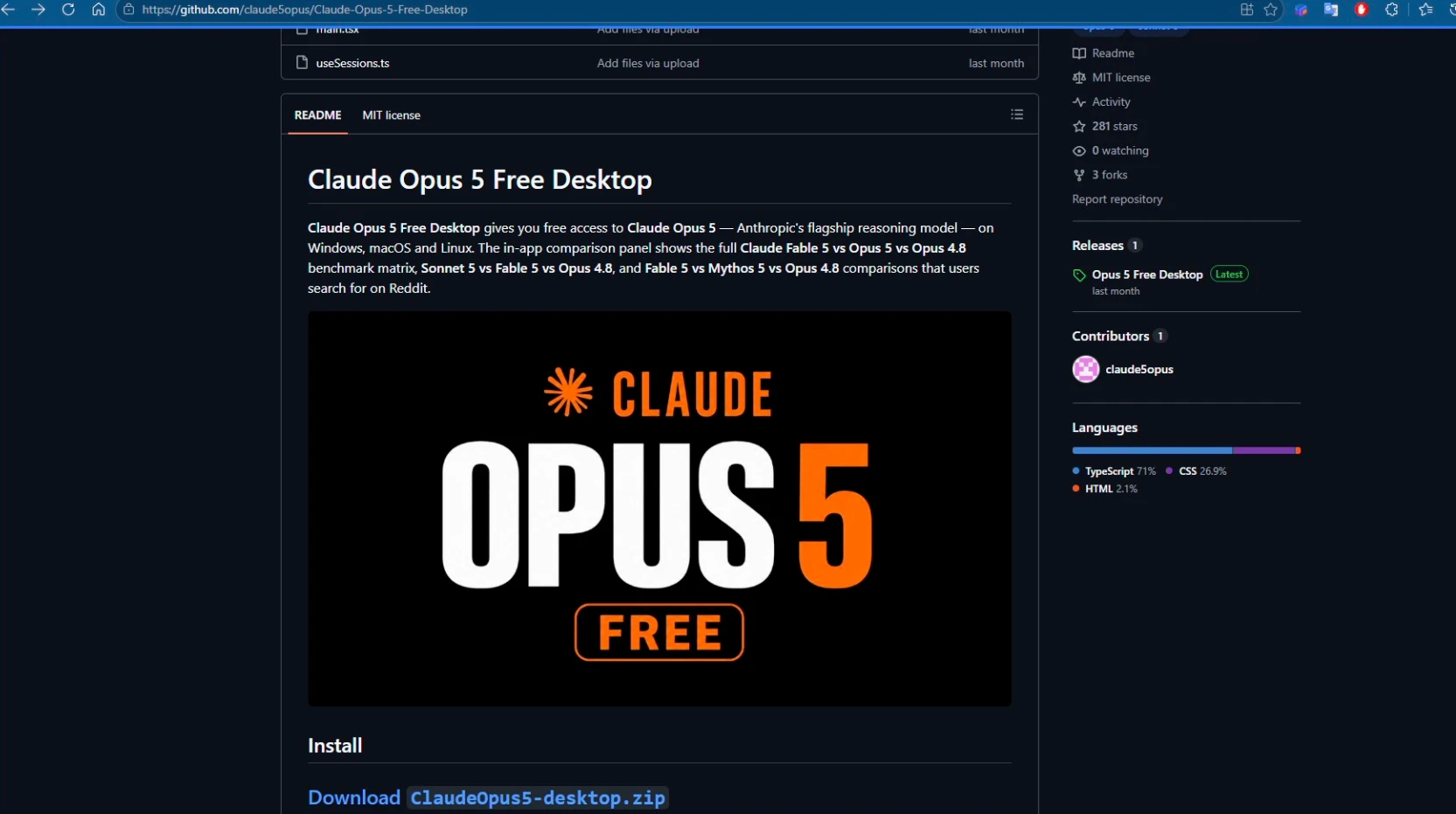
A GitHub repository named Claude-Opus-5-Free-Desktop impersonated Anthropic.
Un repositorio llamado Claude-Opus-5-Free-Desktop suplantaba a Anthropic.
The advertised ZIP was about 101 MB and launched RevStealer instead of a real app.
El ZIP anunciado pesaba unos 101 MB y lanzaba RevStealer en lugar de una app real.
The malware targeted browsers, password managers, crypto wallets, VPNs, chat apps, game accounts, screenshots, and documents.
El malware apuntaba a navegadores, gestores de contraseñas, billeteras cripto, VPN, chats, cuentas de juegos, capturas y documentos.
It used environment checks, encrypted configuration, indirect system calls, C2 fallback, and self-deletion.
Usaba controles del entorno, configuración cifrada, llamadas indirectas al sistema, respaldo de C2 y autoeliminación.
English
Morphisec reported that a malicious GitHub repository impersonated Anthropic and claimed to provide free access to Claude Opus 5. The repository distributed RevStealer, a Windows information stealer focused on passwords, cryptocurrency wallet data, and login credentials.
The campaign relied on social engineering. Victims were directed to GitHub repositories that appeared to host legitimate free software, and the same lure pattern also appeared around game-cheat-themed sites.
The repository was named Claude-Opus-5-Free-Desktop. It offered a file called ClaudeOpus5-desktop.zip, listed at about 101 MB, and supported the deception with screenshots and model comparison charts.
When the file ran, no visible application window opened. The program first checked system memory, processor count, hostname, username, and graphics hardware against blocklist conditions. It then attempted to add the user's AppData directory to Microsoft Defender exclusions, decrypted a bundled file, and launched RevStealer in the background.
The native payload used several stealth choices: resolving Windows APIs without a normal import table, keeping configuration encrypted until use, calling the kernel through indirect system calls, streaming stolen data to its server instead of writing one obvious archive, and deleting itself after execution.
Its command-and-control setup included a fallback path. If the primary server was unavailable, the malware could retrieve another address from a smart contract on the Polygon blockchain, allowing infrastructure changes without rebuilding the malware.
The collection list was broad. It targeted browser databases and saved credentials, browser extension storage, Windows Credential Manager entries, files from around a dozen password managers, files from more than fifty cryptocurrency wallet apps, VPN and remote access credentials, messaging app data, game launcher accounts, OBS streaming profiles, clipboard content, screenshots, and selected user documents.
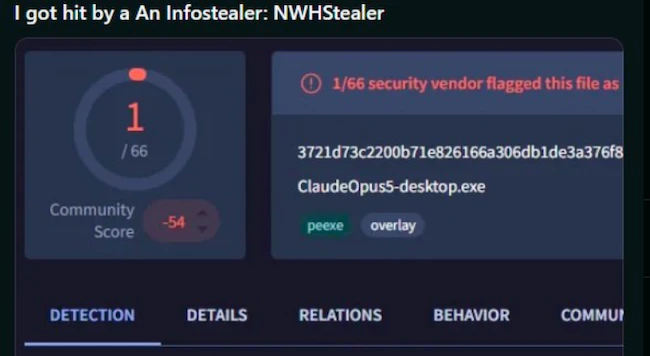
A victim cited in the report said their Microsoft and EA accounts were compromised shortly after running the download.
Before collecting data, RevStealer ran ten checks designed to spot virtual machines and sandboxes. These checks covered processes and analysis tools, CPU and memory traits, graphics hardware, system identity, uptime, and related signals. Each result contributed to a hidden score, and once the score passed the threshold, the malware waited briefly and exited.
A separate regional check stopped execution on systems set to Russian, Ukrainian, or several Central Asian languages. Under certain conditions, the malware also displayed a fake verification window with a random challenge code; closing the window or entering the wrong response stopped the run.
RevStealer registered a vectored exception handler around its collection routines so one failed collector would not end the whole theft session. For Chrome and Edge environments using newer App-Bound encryption, it launched the browser under debugger control and placed a hardware breakpoint to capture the App-Bound key when it appeared in memory.
Once collection ended, the malware could receive a task list from its server. Confirmed actions included downloading and running a file or executing an operator-supplied command line. Some actions could request elevated Windows permissions and trigger a UAC prompt, but the reporting did not describe a UAC bypass.
Morphisec's conclusion emphasized that attackers can keep changing lures, packaging, hashes, and infrastructure. The report argues that prevention should focus on the execution techniques the attack chain depends on. Morphisec also published indicators of compromise with its full report.
Español
Morphisec informó que un repositorio malicioso de GitHub suplantaba a Anthropic y afirmaba ofrecer acceso gratuito a Claude Opus 5. El repositorio distribuía RevStealer, un ladrón de información para Windows centrado en contraseñas, datos de billeteras de criptomonedas y credenciales de inicio de sesión.
La campaña se basaba en ingeniería social. Las víctimas eran llevadas a repositorios de GitHub que parecían alojar software gratuito legítimo, y el mismo patrón de señuelo también aparecía en sitios con temática de trampas para juegos.
El repositorio se llamaba Claude-Opus-5-Free-Desktop. Ofrecía un archivo llamado ClaudeOpus5-desktop.zip, listado con unos 101 MB, y reforzaba el engaño con capturas de pantalla y tablas comparativas de modelos.
Al ejecutar el archivo, no aparecía ninguna ventana visible de aplicación. El programa comprobaba primero la memoria del sistema, el número de procesadores, el nombre del equipo, el usuario y el hardware gráfico frente a condiciones de bloqueo. Después intentaba añadir el directorio AppData del usuario a las exclusiones de Microsoft Defender, descifraba un archivo incluido y lanzaba RevStealer en segundo plano.
La carga nativa utilizaba varias técnicas de sigilo: resolvía API de Windows sin una tabla normal de importaciones, mantenía la configuración cifrada hasta el momento de uso, llamaba al kernel mediante llamadas indirectas al sistema, transmitía los datos robados al servidor en lugar de dejar un archivo evidente en disco y se eliminaba al terminar.
Su comunicación de mando y control incluía una ruta alternativa. Si el servidor principal no estaba disponible, el malware podía recuperar otra dirección desde un contrato inteligente en la blockchain de Polygon, lo que permitía cambiar infraestructura sin reconstruir el malware.
La lista de recolección era amplia. Apuntaba a bases de datos del navegador y credenciales guardadas, almacenamiento de extensiones, entradas de Windows Credential Manager, archivos de alrededor de una docena de gestores de contraseñas, archivos de más de cincuenta apps de billeteras cripto, credenciales de VPN y acceso remoto, datos de mensajería, cuentas de lanzadores de juegos, perfiles de OBS, contenido del portapapeles, capturas de pantalla y documentos seleccionados del usuario.
Una víctima citada en el reporte indicó que sus cuentas de Microsoft y EA fueron comprometidas poco después de ejecutar la descarga.
Antes de recolectar datos, RevStealer ejecutaba diez comprobaciones diseñadas para detectar máquinas virtuales y sandboxes. Estas comprobaciones cubrían procesos y herramientas de análisis, características de CPU y memoria, hardware gráfico, identidad del sistema, tiempo de actividad y señales relacionadas. Cada resultado sumaba a una puntuación oculta, y cuando la puntuación superaba el umbral, el malware esperaba brevemente y salía.
Una comprobación regional separada detenía la ejecución en sistemas configurados en ruso, ucraniano o varios idiomas de Asia Central. Bajo ciertas condiciones, el malware también mostraba una ventana falsa de verificación con un código aleatorio; cerrar la ventana o introducir una respuesta incorrecta detenía la ejecución.
RevStealer registraba un manejador de excepciones vectorizadas alrededor de sus rutinas de recolección para que el fallo de un colector no terminara toda la sesión de robo. En entornos Chrome y Edge con el cifrado App-Bound más reciente, iniciaba el navegador bajo control de depurador y colocaba un breakpoint de hardware para capturar la clave App-Bound cuando aparecía en memoria.
Cuando terminaba la recolección, el malware podía recibir una lista de tareas desde su servidor. Las acciones confirmadas incluían descargar y ejecutar un archivo, o ejecutar una línea de comandos enviada por el operador. Algunas acciones podían solicitar permisos elevados de Windows y activar un aviso de UAC, pero el reporte no describía una omisión de UAC.
La conclusión de Morphisec subrayaba que los atacantes pueden seguir cambiando señuelos, empaquetado, hashes e infraestructura. El reporte sostiene que la prevención debe centrarse en las técnicas de ejecución de las que depende la cadena de ataque. Morphisec también publicó indicadores de compromiso junto con su informe completo.
Attack Chain
Cadena Del Ataque
A repository impersonating Anthropic uses Claude Opus 5 branding and a free desktop app offer.
Un repositorio que suplanta a Anthropic usa la marca Claude Opus 5 y una oferta de app gratuita para escritorio.